At Hatzlaja Early Childhood Academy, we see firsthand how important sleep is for children. Some mornings, little ones arrive yawning and restless because they went to bed late or spent too much time on screens before bed. A good night’s sleep is more than just rest — it is essential for growth, brain development, and emotional regulation.
When children ages 0–5 don’t get enough sleep, it affects their mood, their ability to learn, and even their health. Let’s take a closer look at how much sleep children need at each stage, why technology before bedtime can interfere, and how families can create a healthy bedtime routine.
How Much Sleep Do Children Need?
FROM MONOPHASIC TO UBERMAN CYCLES
Infants (0–12 months) 👶
- 14–17 hours per day, including naps.
- Babies naturally follow a polyphasic sleep pattern — meaning they sleep in many short cycles throughout the day and night. This supports rapid brain development and physical growth. Waking often at night is normal at this stage.
Toddlers (1–2 years) 🚼
- 11–14 hours per day, including one or two naps.
- Toddlers begin shifting toward a biphasic sleep cycle — one long nighttime stretch plus one or two naps. Sleep helps with emotional regulation, which is why well-rested toddlers have fewer tantrums and more focus for play and learning.
Preschoolers (3–5 years) 🎨
- 10–13 hours per day, with one nap or quiet time.
- Most preschoolers are still biphasic, though some naturally drop naps and move toward monophasic sleep (a single nighttime stretch). Deep sleep during this stage supports memory, language development, and problem-solving.
School-Agers (5+ years) 🎒
- 9–12 hours per night.
- By this age, most children are fully monophasic. A consistent bedtime routine is key to supporting energy, attention, and learning at school.
- For comparison, some adults experiment with alternative sleep cycles, like the Everyman (a shorter main sleep plus naps) or the Uberman (only naps spread throughout the day). These are not recommended for children, but they highlight how different human sleep patterns can be.
The Problem with Technology Before Bed 📱
Many children today are exposed to television, tablets, or phones before bedtime. While this may seem like a calming activity, research shows that blue light from screens blocks melatonin, the natural hormone that helps children fall asleep.
This can:
- Delay bedtime by 30–60 minutes or more.
- Lead to restless or lighter sleep.
- Reduce the total hours of restorative rest.
That’s why we encourage families to turn off screens at least one hour before bedtime. Instead, use calming alternatives like story time, gentle music, meditation or prayer.
A Healthy Sleep Routine for Families 🌙
The good news is that small, consistent changes can transform bedtime. At Hatzlaja, we follow a nap routine that parents can easily adapt for the home.
Sample Bedtime Routine (works for all ages):
- Set a regular bedtime and wake time — the same time every night, even on weekends.
- Wind down the environment — turn down the lights**, close blinds, and lower noise.
- Adjust the room temperature — keep the bedroom comfortably cool at 68-72 °F for infants and 65–70 °F for toddlers and older children.
- Transition with calm activities — read a story, pray, or use a short music or meditation video. Here are a few examples: https://bit.ly/46l0Srh (for infants), https://bit.ly/4ncjqj4 or https://bit.ly/462kQWF (for toddlers and older)
- No screens before bed — replace them with family connection and quiet play.
- Allow children to wake naturally whenever possible. Waking rested means they are ready to learn, grow, and enjoy their day.
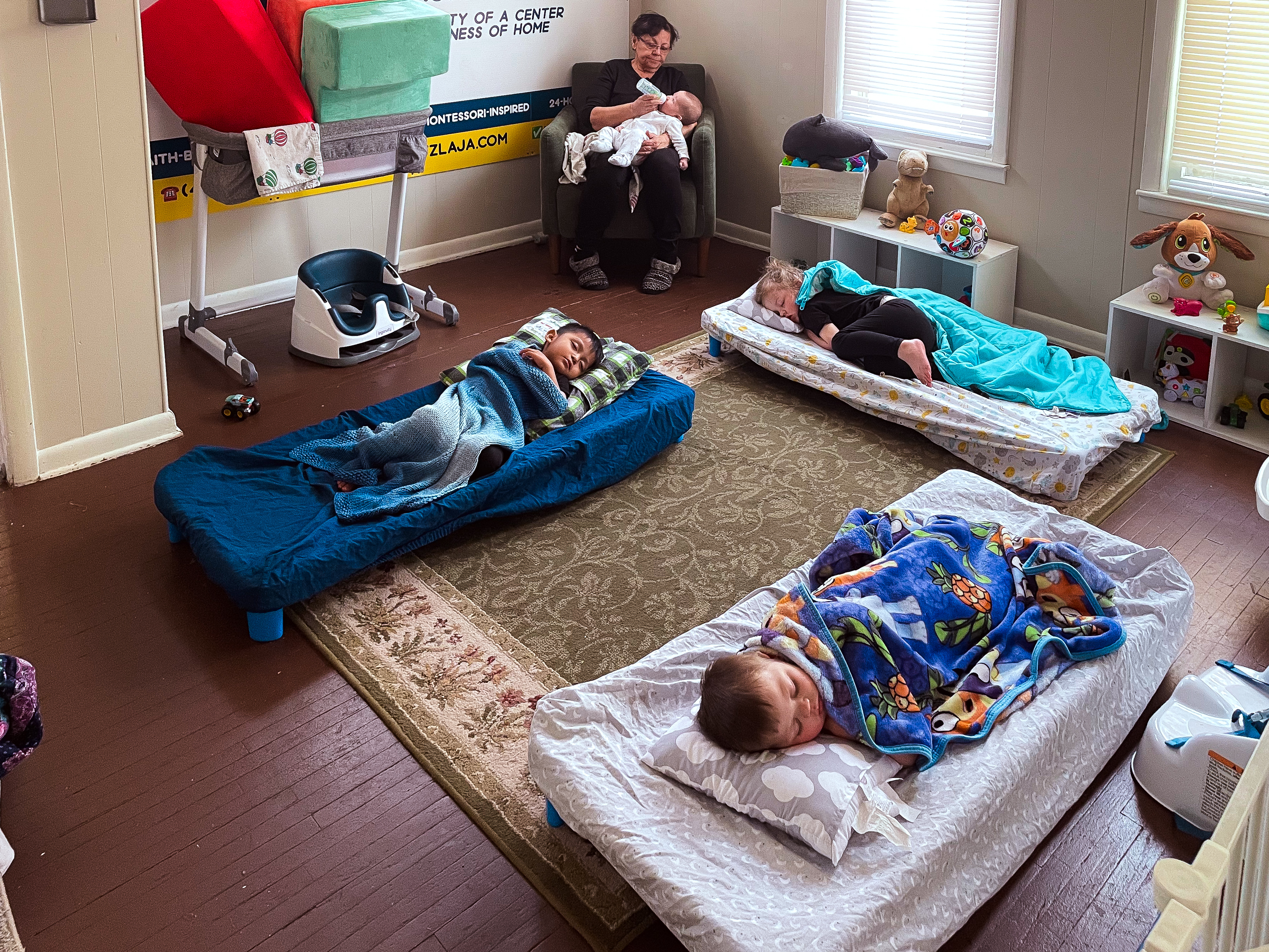
**We dim the lights at nap time, but do not make the room completely dark so staff can safely observe children’s breathing and skin color while they rest.
Naptime Expectations at Hatzlaja
At Hatzlaja Early Childhood Academy, it is our expectation that all students nap until they reach Kindergarten. Research consistently shows that preschool-aged children benefit greatly from naps, which support both physical growth and learning. Some of the benefits of napping include:
- Improved memory and learning – naps help children consolidate new information and strengthen skills.
- Better behavior and emotional regulation – well-rested children are more patient, cooperative, and able to manage big feelings.
- Stronger immune systems – quality rest supports the body’s natural ability to fight illness.
- Healthy growth – much of a child’s physical growth happens during rest.
While we cannot force children to fall asleep, it is the expectation that all children in our toddler and preschool classrooms rest quietly on their cots during nap time. This ensures that children who do need sleep are not disturbed by others.
Some students may need a little extra help settling down, such as a calm reassurance, gentle back rub, or quiet environment. Once they are settled, most children fall asleep easily and enjoy the restorative rest they need. For those who remain awake, resting quietly is still beneficial for their bodies and minds.
Final Thoughts
Healthy sleep is just as important as nutrition and learning for young children. By creating a consistent, screen-free, and peaceful bedtime routine, families can help children feel rested, focused, and joyful each morning.
At Hatzlaja Early Childhood Academy, we work hand in hand with parents to ensure children thrive — awake, alert, and full of energy to explore the world around them.